
Online Brainspotting sessions · one-to-one
Online Brainspotting with Ruth Edwards
Brainspotting brings focused visual attention together with awareness of emotions and body sensations.
I’m a Brainspotting practitioner, trained to Phase 3. I offer Brainspotting within my one-to-one coaching (online by video call) and during in-person Healing Days in Shropshire.
We begin by discussing what you would like support with and whether this approach feels appropriate for you. You don’t need to describe every detail of past experiences, and you can ask questions, pause or stop at any time.
Book a free 30-minute discovery call“From our very first conversation, Ruth made me feel completely safe, understood and at ease.”
- Developed by
- Dr David Grand, 2003
- Ruth's training
- Brainspotting practitioner, trained to Phase 3
- Where
- Online worldwide, or in person in Shropshire
- Alongside
- Somatic trauma-informed coaching
What is Brainspotting?
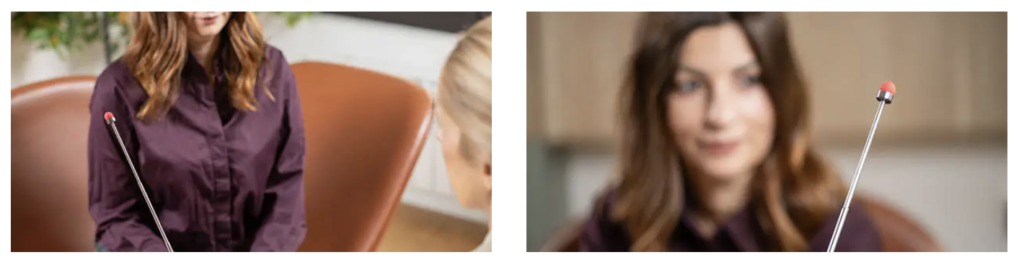
Brainspotting (BSP) is a brain–body approach developed by Dr David Grand in 2003. It uses your field of vision to help you notice and work with difficult emotions, memories and body sensations. My sessions are one-to-one, and you don’t need to describe every detail of past experiences.
A “brainspot” is a specific eye position that connects with the issue you're working on. It's found by noticing subtle reflexes, known as oculomotor reflexes, such as blinks or small eye movements, alongside where you feel the strongest response in your body.
What a session is like
Tap through the four steps.
You don’t always need to talk through past events in detail, and we go at a pace that feels manageable for you. You can pause or stop at any time.
Scope of this workI offer Brainspotting within a coaching relationship. My work is not a treatment for medical or mental health conditions and does not replace therapy or medical care.
What can Brainspotting help with?
People have Brainspotting for support with things like:
- Past experiences that still feel stuck
- Public speaking and performance nerves
- Stress and anxiety
- Grief
- Low self-esteem
Online Brainspotting
Brainspotting can be offered by video call. My sessions are one-to-one, and you’ll need a quiet, private space and a reliable internet connection. We’ll discuss what to expect before beginning. I also offer Brainspotting during in-person Healing Days in Shropshire.
Brainspotting vs EMDR
Brainspotting and EMDR are different approaches. EMDR follows a structured therapeutic process that includes bilateral stimulation, such as eye movements or tapping. Brainspotting generally uses a visual focus alongside attention to emotions and body sensations.
Is this right for me?
This may feel right if
- You understand what happened, but it still feels stuck
- You’d like to work with what you notice in your body, as well as talking
- You’d prefer not to describe every detail of past experiences
- You’d like to go at your own pace, with room to pause or stop
Other support may be better first if
- You’re in crisis or don’t feel safe right now. Please use the urgent help details at the top of this page
- You’re looking for assessment or treatment for a mental health condition, including PTSD
- You’d prefer a treatment with a larger research base, such as trauma-focused CBT or EMDR
Not sure? The free 30-minute discovery call is there to talk it through, and if a different kind of support would suit you better, I’ll tell you honestly.
Book a free 30-minute discovery call“I chose to work with Ruth for a full-day session, and the experience was incredibly powerful. Nothing felt rushed or forced.”
S.W., Healing Day client · Google review · Read more client reviews

About Ruth Edwards
I’m a somatic trauma-informed coach and Brainspotting practitioner, based in Shropshire, UK. I bring Brainspotting into my one-to-one online coaching and Healing Days, alongside somatic coaching, Internal Family Systems-informed parts work, positive psychology and hypnotherapy.
somatic trauma-informed coach · Brainspotting practitioner · BSc (Hons) Psychology · CPD accredited Narcissistic Abuse Specialist
Read my storyBrainspotting: common questions
What is Brainspotting?
Brainspotting is a brain–body approach developed by Dr David Grand in 2003. It uses where you look to help you notice and work with difficult emotions, memories and body sensations. A practitioner helps you find an eye position, or brainspot, connected to what you feel, and you hold your focus there with them alongside you.
Can Brainspotting be done online?
Yes. Brainspotting can be offered by video call, so you can have sessions from home wherever you are in the world. My sessions are one-to-one, and you’ll need a quiet, private space and a reliable internet connection. I also offer it in person during Healing Days in Shropshire.
Brainspotting vs EMDR: what’s the difference?
Brainspotting and EMDR are different approaches. EMDR follows a structured therapeutic process that includes bilateral stimulation, such as eye movements or tapping. Brainspotting generally uses a visual focus alongside attention to emotions and body sensations.
Do I have to talk about my past in detail?
No. Brainspotting doesn’t always require you to describe past events in detail. You decide what you share and when, and we go at a pace you choose. You can ask questions, pause or stop at any point in a session.
How do I start?
Book a free 30-minute discovery call. We’ll talk about what you’d like support with, how Brainspotting can work online, and whether it feels like a good fit for you. There’s no obligation to book anything afterwards, and you don’t need to explain your whole story on the call.