
RUTH EDWARDS the somatic healing coach

Somatic exercises for beginners: 7 simple practices to start with

By Ruth Edwards, somatic trauma-informed coach · 8 min read

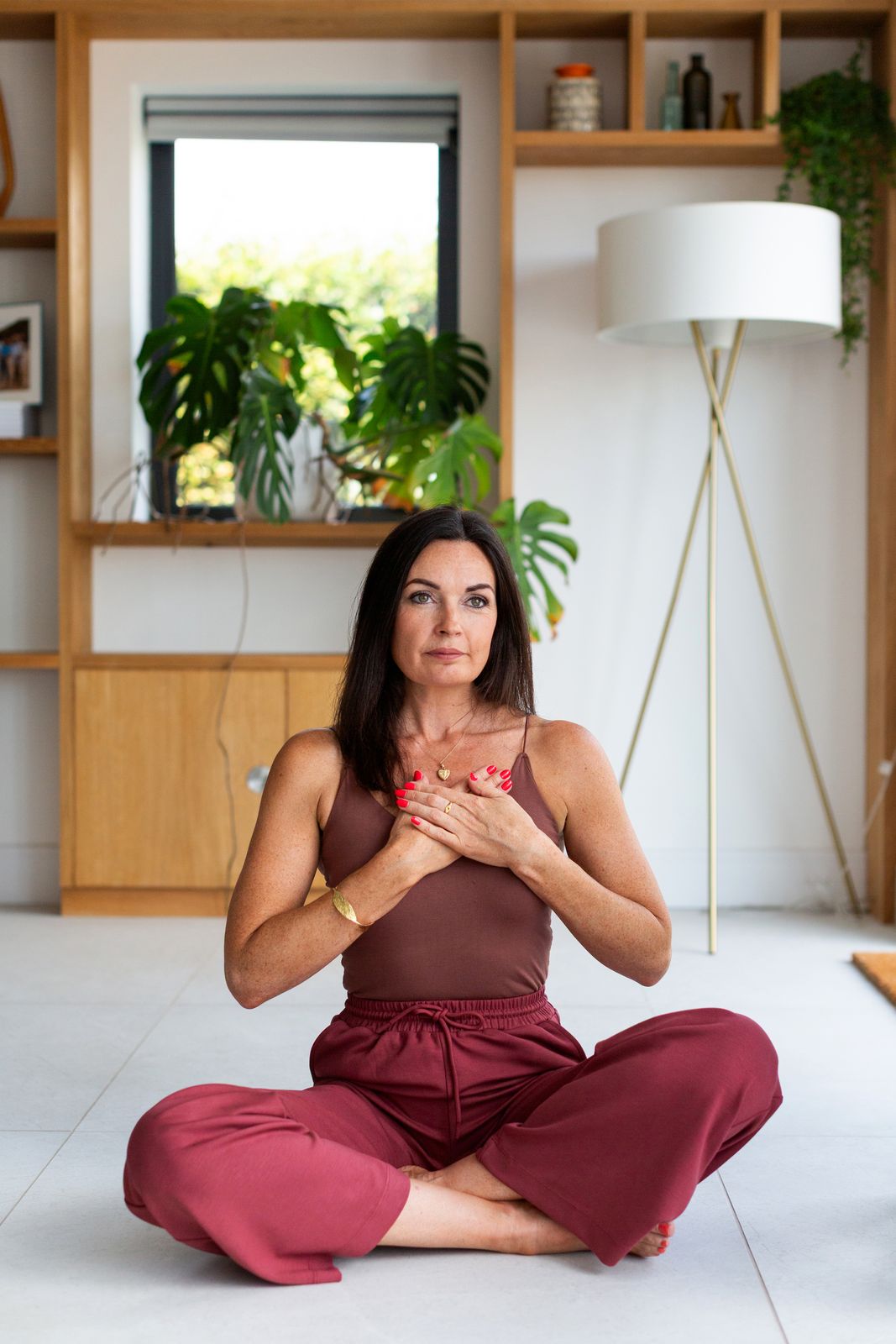
Ruth Edwards, somatic coach, sitting on the floor by a window surrounded by plants

Somatic exercises are gentle, body-based practices that help you notice what’s happening inside you, such as your breath, muscle tension and how settled or on edge you feel, and respond with small actions that help you steady yourself. For beginners, short daily practices like a longer out-breath, feeling your feet on the floor and slowly looking around the room are a good place to start.

What are somatic exercises?

“Soma” comes from the Greek word for the body. The philosopher and educator Thomas Hanna coined the term “somatics” in 1976 to describe the body as it’s experienced from the inside, rather than looked at from the outside.

Somatic exercises put that idea into practice. Instead of working towards a shape, a number of reps or a target, you move slowly and pay attention to sensation. You might notice where you’re holding tension, how your breathing changes, or the moment your shoulders drop.

Many people use somatic exercises to support nervous system regulation: getting better at noticing when they’re wired, on edge or shut down, and finding small ways back to feeling steady.

Is somatic yoga the same as somatic exercises?

They overlap. “Somatic yoga” usually describes slow, mindful yoga-style movement where the focus is on what you feel inside, not on how a pose looks. Somatic exercises is a broader term that also covers breathing, grounding, self-touch and simple orienting practices that don’t look like yoga at all.

If you enjoy movement, somatic yoga classes can be a lovely way in. If yoga isn’t for you, or moving feels hard right now, the practices below can be done sitting in a chair.

How do I start somatic exercises as a beginner?

Start small. One or two minutes, once or twice a day, is plenty. The aim isn’t to feel calm on demand; it’s to get curious about what’s happening in your body and to notice what helps.

  • Check in first. Ask yourself whether you feel wired and revved up, settled enough, or flat and far away. Different practices suit different states.
  • Go slowly. Slower usually means you notice more.
  • Stay in charge. You can stop at any point. Nothing needs to be pushed through.
  • Notice, don’t judge. Some days a practice will help a lot, some days not much. Both are useful information.

The idea of a “window of tolerance”, introduced by Dr Dan Siegel in 1999, is a helpful map here: most of us move above, inside and below our window through the day, and somatic practices can help us spend more time inside it.

7 somatic exercises for beginners

1. Check in with your body

1 minute · any time

  1. Pause and notice your breathing, without changing it.
  2. Scan slowly from your head to your feet. Where do you feel tension, warmth, heaviness, or not much at all?
  3. Ask: am I above, inside or below my window right now?

2. The longer out-breath

1–5 minutes · when you feel wired or on edge

  1. Breathe in gently through your nose for a count of four.
  2. Breathe out slowly for a count of six.
  3. Repeat for about six breaths. If counting feels stressful, just let the out-breath be a little longer than the in-breath.

The NHS also suggests a simple breathing exercise for stress: breathing gently into your belly, counting from one to five on the in-breath and the out-breath, for at least five minutes.

3. Feet on the floor

1–2 minutes · when you feel far away or overwhelmed

  1. Sit or stand with both feet flat on the floor.
  2. Press down gently and notice the ground pressing back.
  3. Notice the weight of your body in the chair or on your legs.

4. Look around the room

1 minute · when you feel foggy, shut down or panicky

  1. Slowly turn your head and let your eyes move around the room.
  2. Name three things you can see: a colour, a shape, something you like.
  3. Let your gaze rest on whatever feels most pleasant or neutral.

5. Hand on heart

1–2 minutes · when you feel anxious, low or self-critical

  1. Place one or both hands on your chest, or anywhere that feels comforting, such as your belly or upper arms.
  2. Notice the warmth and gentle pressure of your hands.
  3. If it feels right, say something kind to yourself, like “this is hard, and I’m doing my best.”

6. Push and release

1 minute · when you feel tense, stuck or restless

  1. Press your palms together firmly in front of your chest, or push your hands against a wall.
  2. Hold for a slow count of five to ten, feeling your arms and shoulders work.
  3. Let go completely and notice the difference. Repeat two or three times.

7. Gentle shake or sway

1–2 minutes · when you feel buzzy or can’t settle

  1. Stand and gently shake out your hands, then your arms, shoulders and legs.
  2. Or sway slowly from side to side, letting your arms swing.
  3. Finish by standing still for a few breaths and noticing how you feel now.

Want these as a printable sheet? Join the free Weekly Nervous System Reset for one short email each Sunday, or download the free guide Get Out of Your Head: 7 body-based ways to calm anxiety.

How often should I do somatic exercises?

Little and often tends to work better than a long session once in a while. Try one practice in the morning, one before a moment you know will be stressful, and one as you wind down in the evening. Over a few weeks, you’ll start to notice which ones help you most, and in which states.

Are somatic exercises safe for everyone?

These practices are gentle, but paying attention to your body can sometimes bring up strong feelings or memories, especially if you’ve been through difficult experiences. If that happens, stop, open your eyes if they’re closed, and look around the room. You don’t need to push through.

Somatic exercises are general self-care. They aren’t a treatment for any medical or mental health condition, and they aren’t a substitute for therapy or medical care. If you have a health condition, an injury or you’re pregnant, check with your GP before starting new movement.

When might one-to-one support help?

Self-guided practices are a great start. One-to-one somatic coaching can help if you’d like support working out what your own patterns are, why certain situations set you off, and which tools work for you. In my online somatic coaching, we map how your nervous system responds to stress and build practical tools together, at your pace.

Quick answers

What are somatic exercises?

Somatic exercises are gentle, body-based practices that help you notice what’s happening inside you, such as breath, tension and how settled you feel, and respond with small actions that help you steady yourself. They include slow movement, breathing, grounding and orienting practices, and focus on how things feel rather than how they look.

What is the best somatic exercise for beginners?

A simple body check-in is a good first step, because it helps you notice whether you feel wired, settled or shut down. From there, a longer out-breath often suits feeling on edge, while feet on the floor or slowly looking around the room can help when you feel far away or foggy.

Is somatic yoga good for beginners?

It can be. Somatic yoga uses slow, mindful movement and focuses on what you feel inside rather than on reaching a pose, so it’s often gentle enough for beginners. If movement feels hard right now, start with seated practices like breathing, grounding and a body check-in, and build up when you’re ready.

How long does it take for somatic exercises to work?

There’s no fixed timeline. Some people notice a small shift, like their shoulders dropping, within a minute or two. Getting to know your own patterns usually takes regular practice over weeks. The aim isn’t to feel calm on demand, but to notice your states more and find your way back to steady.

Sources

Related support: Online somatic coaching · The vagus nerve and feeling safe in your body · Free body check-in and breathing pause

This article is for general information. Coaching is not a substitute for therapy or medical care. If you’re in the UK and need urgent help, call 999, NHS 111 (option 2) or Samaritans on 116 123. If you’re elsewhere, contact your local emergency services.

Ruth Edwards, somatic trauma-informed coach and Brainspotting practitioner

Ruth Edwards is a somatic trauma-informed coach and Brainspotting practitioner, working online worldwide and in person in Shropshire, UK. About Ruth


If you’re in the UK and in immediate danger, call 999. If you’re elsewhere, contact your local emergency services. For free, confidential support 24 hours a day, call the National Domestic Abuse Helpline on 0808 2000 247.

Signs of narcissistic abuse: what to look out for

By Ruth Edwards, CPD accredited Narcissistic Abuse Specialist and somatic trauma-informed coach · 9 min read

Ruth Edwards, narcissistic abuse recovery coach, walking in nature

Common signs of narcissistic abuse include being made to doubt your own memory or judgement, cycles of intense affection followed by criticism or coldness, being blamed for problems you didn’t cause, being cut off from friends and family, and feeling you’re always walking on eggshells. It’s usually a pattern over time, not one bad moment.

What is narcissistic abuse?

“Narcissistic abuse” isn’t a medical or legal term. It’s a phrase people use to describe a pattern of emotional manipulation and control in a close relationship, often with a partner, parent, friend or colleague who shows strong narcissistic traits, such as needing admiration, lacking empathy, and reacting badly to criticism.

It often builds slowly. Many people only recognise it looking back, once they have some distance. That doesn’t mean you missed something obvious. Manipulation is designed to be hard to see from the inside.

What are the signs of narcissistic abuse?

No list can tell you for certain what’s happening in your relationship, but these are patterns many people describe. One or two on their own may not mean much. Several together, repeated over time, are worth paying attention to.

  1. You doubt your own memoryThings you clearly remember are denied or rewritten, until you start to question yourself. This is often called gaslighting.
  2. Intense affection, then coldnessThe early days felt overwhelming in a good way, with lots of attention and big promises, followed by criticism, withdrawal or contempt.
  3. Constant criticismYour appearance, choices, friends or work are regularly put down, sometimes disguised as jokes or “just being honest”.
  4. Everything is your faultProblems are turned around so that you end up apologising, even when you’re the one who was hurt.
  5. The silent treatmentAffection, conversation or contact is withdrawn as punishment, often without explanation.
  6. IsolationYou see less of friends and family, either because they’re criticised or because it causes too much trouble to see them.
  7. Being monitoredYour phone, messages, spending or whereabouts are checked, or you’re expected to account for your time.
  8. Control over moneyAccess to money is restricted, or you’re made to feel you have to justify every purchase.
  9. The rules keep changingWhat was fine yesterday causes a row today, so you’re never quite sure how to get it right.
  10. Walking on eggshellsYou plan what you say, watch their mood and change your behaviour to avoid a reaction.
  11. Being drawn back inWhen you pull away, they suddenly become charming, apologetic or full of promises again.
  12. Your reputation is underminedOthers are told a version of events that makes you look unstable, difficult or to blame.

How can narcissistic abuse affect you?

Living with this kind of pattern can affect how you feel, think and how your body responds. People often describe:

  • feeling anxious, on edge or unable to switch off
  • doubting their judgement, even about small decisions
  • losing touch with who they are and what they enjoy
  • difficulty sleeping, or replaying conversations over and over
  • a body that braces, flinches at a message notification or tenses at certain tones of voice
  • a strong pull back towards the person, even when they know the relationship is hurting them

These responses make sense. When something has felt threatening for a long time, your nervous system learns to stay alert. It isn’t weakness, and it isn’t you overreacting.

Is narcissistic abuse the same as coercive control?

They overlap, but they aren’t the same thing. Coercive control is a legal term. In England and Wales, controlling or coercive behaviour in an intimate or family relationship became a criminal offence under section 76 of the Serious Crime Act 2015, which came into force on 29 December 2015. The government’s statutory guidance gives examples including isolating someone from friends and family, monitoring their daily activities, restricting their access to money and intentionally undermining or manipulating them.

Not every relationship described as narcissistic abuse will meet the legal test, and you don’t need to work that out on your own. Specialist domestic abuse services can talk it through with you.

Do I need to know if they’re a narcissist?

No. Narcissistic personality disorder is a diagnosis that only a qualified professional can make, after a proper assessment. You don’t need a label for the other person to take your own experience seriously.

It’s often more helpful to focus on the behaviour and how it affects you: do you feel safe, respected and free to be yourself in this relationship? If the answer is often no, that matters, whatever the other person would or wouldn’t be diagnosed with.

What can I do if I recognise these signs?

  • If you’re in the UK and in danger now, call 999. If you can’t speak, the police may still be able to help. If you’re elsewhere, contact your local emergency services.
  • Talk to a specialist service. In the UK, the National Domestic Abuse Helpline, run by Refuge, is free and open 24 hours a day on 0808 2000 247. The Men’s Advice Line, run by Respect, is on 0808 8010 327.
  • Keep a private record of what happens, if it’s safe to do so, somewhere the other person can’t access.
  • Reconnect with someone you trust, even with a short message. Isolation makes everything harder.
  • Be gentle with yourself. Recognising what’s happening is a big step, and there’s no right speed to do anything about it.

How can somatic coaching support recovery?

Recovery isn’t only about understanding what happened. Many people find their body is still on high alert long after a relationship has ended. Somatic coaching works with the body as well as your thoughts, so we can notice those responses and build practical tools to help you feel steadier, at your pace.

In my narcissistic abuse recovery coaching, we also look at the patterns you experienced so they make more sense, and work on rebuilding your trust in your own judgement. Sessions take place online, wherever you are. Coaching isn’t a crisis service and isn’t a substitute for therapy, but it can sit alongside other support.

“Ruth has been so reassuring and has helped me to see and understand the patterns of behaviour with more clarity.”
S.D., client

Quick answers

What are the signs of narcissistic abuse?

Common signs include doubting your own memory, cycles of intense affection followed by criticism or coldness, being blamed for problems you didn’t cause, the silent treatment, isolation from friends and family, being monitored, and feeling you’re always walking on eggshells. It’s usually a repeated pattern over time rather than a single incident.

Is narcissistic abuse a form of domestic abuse?

It can be. Many of the behaviours people describe as narcissistic abuse, such as isolation, monitoring, controlling money and manipulation, are recognised forms of domestic abuse and coercive control. In England and Wales, controlling or coercive behaviour in an intimate or family relationship is a criminal offence. Specialist services can help you understand your situation.

Can I recover from narcissistic abuse?

Many people do rebuild their confidence and sense of self, though there’s no fixed timeline and recovery rarely moves in a straight line. Support from people you trust, specialist services and, for some, therapy or coaching can help. Being gentle with yourself and going at your own pace matters more than getting it “right”.

Why do I still miss someone who hurt me?

It’s very common. When harm is mixed with moments of warmth, apology or relief, a strong emotional bond can form, sometimes called a trauma bond. Missing someone doesn’t mean what happened was okay, or that you’ve done anything wrong. It’s one of the reasons leaving, and staying away, can feel so hard.

Sources

Related support: Narcissistic abuse recovery coaching · Online somatic coaching · Can trauma be stored in the body?

This article is for general information. Coaching is not a substitute for therapy or medical care, and isn’t a crisis service. If you’re in the UK and need urgent help, call 999, NHS 111 (option 2) or Samaritans on 116 123. If you’re elsewhere, contact your local emergency services.

Ruth Edwards, somatic trauma-informed coach and Brainspotting practitioner

Ruth Edwards is a somatic trauma-informed coach, CPD accredited Narcissistic Abuse Specialist and Brainspotting practitioner, working online worldwide and in person in Shropshire, UK. About Ruth

Can trauma be stored in the body?

By Ruth Edwards, somatic trauma-informed coach · 8 min read

Ruth Edwards seated in a calm room with plants and framed pictures

Trauma isn’t stored in the body like a file in a drawer, but frightening or overwhelming experiences can shape how your nervous system responds afterwards. That can show up physically, as tension, a racing heart, poor sleep, tummy problems or feeling shut down. “Stored in the body” is a shorthand for this, and researchers still debate how best to explain it.

What does “trauma stored in the body” mean?

When people say trauma is “stored in the body”, they usually mean something they’ve noticed for themselves: long after a difficult experience is over, their body still reacts as if it isn’t. A smell, a tone of voice or a crowded room can bring a rush of fear, tension or numbness before they’ve had time to think.

That experience is real and common. The phrase is a helpful shorthand, but it isn’t a scientific description. Memories aren’t literally kept in muscles or organs. What seems to change is how your nervous system has learned to respond to anything that resembles threat.

Where does the idea come from?

The idea became widely known through The Body Keeps the Score by psychiatrist Bessel van der Kolk, published in 2014. It has been a long-running bestseller and has helped many people make sense of their experiences.

It has also been criticised. Some researchers and reviewers have argued that the book overstates or misrepresents parts of the science, and that some of the approaches it promotes have little research behind them. Both things can be true: the book can feel validating, and still not be the last word on the evidence.

What can trauma feel like in the body?

Everyone is different, but the NHS lists physical symptoms that can be part of post-traumatic stress disorder (PTSD), including repeated headaches, tummy problems or pain anywhere in the body that has no physical cause, and difficulty sleeping. People also describe:

  • feeling constantly on edge, jumpy or easily startled
  • tension in the jaw, shoulders, chest or stomach
  • a racing heart or shallow breathing in situations that seem harmless
  • feeling numb, flat or far away from yourself
  • exhaustion that rest doesn’t seem to fix

These can have many causes, so it’s important to speak to your GP about physical symptoms rather than assume they’re all to do with stress or past experiences.

Why does the body react before the mind?

Your nervous system is constantly scanning for safety and danger, mostly below conscious awareness. When something feels threatening, it can speed you up (fight or flight), shut you down (freeze), or push you to keep others happy (sometimes called the fawn response), often before your thinking brain has caught up.

After overwhelming experiences, that system can become more sensitive, reacting strongly to reminders, or staying on alert even when you’re safe. That’s why understanding your history, on its own, doesn’t always change how you react. Insight happens in your thinking; many of these responses can feel automatic.

You might also like: I know why I’m like this, so why am I still stuck?

Can you release trauma from the body?

You’ll see lots of claims online about “releasing” trauma from the body with a particular exercise, stretch or technique. There isn’t good evidence that any single exercise gets rid of trauma, so it’s worth being cautious about promises like that.

What body-based approaches can offer is a different kind of support: learning to notice your body’s signals, recognising when you’re moving out of your window of tolerance, and practising ways to settle yourself. Many people find this helps them feel steadier and more in charge.

If you have symptoms of PTSD, speak to your GP. In the UK, NICE recommends trauma-focused psychological treatments such as trauma-focused cognitive behavioural therapy (CBT) and eye movement desensitisation and reprocessing (EMDR) for adults with PTSD. Body-based work can sit alongside that kind of care, rather than replace it.

Gentle ways to start

If you’d like to begin noticing how stress shows up in your body, keep it small and go slowly:

  • Check in. Pause, notice your breath and scan your body from head to feet.
  • Lengthen the out-breath. Breathe in for four, out for six, for a minute or so.
  • Feel your feet. Press them gently into the floor and notice the support underneath you.
  • Look around. Slowly name three things you can see in the room.

If anything brings up more than feels manageable, stop and look around the room. You don’t need to push through. There are more practices in somatic exercises for beginners.

Where does somatic coaching fit in?

I’m a somatic trauma-informed coach, not a medical professional, and coaching isn’t a treatment for PTSD or any other condition. What I offer is one-to-one support to understand your own nervous system, notice your patterns as they happen, and build practical tools to feel steadier, at a pace you choose.

Some people come to online somatic coaching or Brainspotting after talking things through elsewhere, when they understand their history but still feel stuck. Others work with me alongside therapy. If it becomes clear you need a different kind of support, I’ll tell you honestly.

Quick answers

Can trauma be stored in the body?

Not literally, like a file in a drawer. But frightening or overwhelming experiences can change how your nervous system responds afterwards, which can show up as tension, a racing heart, poor sleep, tummy problems or feeling shut down. “Stored in the body” is a common shorthand for this, and researchers still debate how best to explain it.

What are physical signs that trauma may be affecting you?

People describe feeling on edge or easily startled, muscle tension, a racing heart, shallow breathing, numbness and tiredness that rest doesn’t fix. The NHS lists headaches, tummy problems, unexplained pain and difficulty sleeping as possible symptoms of PTSD. Physical symptoms can have many causes, so check them with your GP.

Can you release trauma with exercises?

There isn’t good evidence that any single exercise releases or gets rid of trauma, so be cautious of promises like that. Body-based practices can help you notice your body’s signals and find ways to settle, which many people find supportive. If you have symptoms of PTSD, speak to your GP about evidence-based treatment.

Is The Body Keeps the Score accurate?

Bessel van der Kolk’s 2014 book has helped many people make sense of their experiences, but some researchers and reviewers argue it overstates or misrepresents parts of the science. It’s worth reading it as one perspective rather than the final word, and talking to a qualified professional about treatment options.

Sources

Related support: Online somatic coaching · Online Brainspotting · Somatic exercises for beginners

This article is for general information. Coaching is not a substitute for therapy or medical care. If you’re in the UK and need urgent help, call 999, NHS 111 (option 2) or Samaritans on 116 123. If you’re elsewhere, contact your local emergency services.

Ruth Edwards, somatic trauma-informed coach and Brainspotting practitioner

Ruth Edwards is a somatic trauma-informed coach and Brainspotting practitioner, working online worldwide and in person in Shropshire, UK. About Ruth
Brainspotting vs EMDR: what’s the difference?

By Ruth Edwards, somatic trauma-informed coach and Brainspotting practitioner · 6 min read

Two Brainspotting sessions with Ruth Edwards, Brainspotting practitioner, using a pointer to find a brainspot

Brainspotting and EMDR both work with the eyes, but in different ways. EMDR uses repeated side-to-side eye movements or other back-and-forth stimulation, while Brainspotting holds your gaze at one chosen position. EMDR has a much larger research base and is recommended by NICE for adults with PTSD. Brainspotting is newer, with less research behind it.

What is EMDR?

EMDR stands for eye movement desensitisation and reprocessing. It was developed by Francine Shapiro in the late 1980s. In EMDR, you bring a distressing memory to mind while following a structured set of steps, which include repeated side-to-side eye movements or other back-and-forth stimulation, such as tapping.

EMDR is usually delivered by a trained therapist as a treatment. In the UK, NICE recommends it as an option for adults with post-traumatic stress disorder (PTSD).

What is Brainspotting?

Brainspotting is a brain–body approach developed by Dr David Grand in 2003. It uses where you look to help you notice and work with difficult emotions, memories and body sensations.

A practitioner helps you find an eye position, or “brainspot”, connected to what you feel in your body, sometimes using a pointer to guide your gaze. You then hold your focus there, with the practitioner alongside you. You don’t always need to describe past events in detail. Read more about online Brainspotting.

Brainspotting and EMDR side by side

EMDRBrainspotting
Developed byFrancine Shapiro, late 1980sDr David Grand, 2003
What the eyes doRepeated side-to-side movements, or other back-and-forth stimulationHold still at one chosen position
StructureA set series of stepsFollows what you notice in your body, at your pace
ResearchExtensive, and recommended by NICE for adults with PTSDNewer, with much less research so far
With RuthNot offeredOnline worldwide, or in person in Shropshire, within coaching

What does the research say?

EMDR has been studied far more than Brainspotting, and that matters if you’re deciding how to get help for PTSD. If you have symptoms of PTSD, speak to your GP. In the UK, NICE recommends trauma-focused psychological treatments, including trauma-focused cognitive behavioural therapy (CBT) and EMDR, for adults with PTSD.

Brainspotting has much less research behind it, so I’d be cautious of anyone making big claims about it. I offer Brainspotting within a coaching relationship. It isn’t a treatment for any medical or mental health condition, and it isn’t a substitute for therapy or medical care.

How do I know which might suit me?

People have different experiences of both approaches. It can help to think about:

  • What you need support with. If you have, or think you may have, PTSD, start with your GP or a mental health professional.
  • How much structure you’d like. EMDR follows a set series of steps. Brainspotting tends to follow what you notice in your body.
  • How much you want to talk. With Brainspotting, you don’t always need to describe past events in detail.
  • How it feels. After a difficult experience with EMDR, one of my clients told me Brainspotting felt gentler and more manageable, and that “I never felt pressured or rushed.” That was one person’s experience, and others find EMDR is exactly what they need.

If you’d like to talk through whether Brainspotting feels right for you, the free 30-minute discovery call is a good place to start. If it becomes clear you need a different kind of support, I’ll tell you honestly.

Quick answers

What is the difference between Brainspotting and EMDR?

Both work with the eyes. EMDR uses repeated side-to-side eye movements or other back-and-forth stimulation within a set series of steps. Brainspotting holds your gaze at one chosen position connected to what you feel in your body. EMDR also has a much larger research base.

Is Brainspotting better than EMDR?

There isn’t good evidence to say one is better. EMDR has far more research behind it and is recommended by NICE for adults with PTSD. Brainspotting is newer, with much less research. Some people find one suits them better than the other.

Can Brainspotting be done online?

Yes. Brainspotting can be offered by video call, so you can have sessions from home wherever you are in the world. My sessions are one-to-one, and you’ll need a quiet, private space and a reliable internet connection.

Do I have to talk about my past in Brainspotting?

Not always in detail. You decide what you share and when, and you can pause or stop at any point in a session.

Is Brainspotting a treatment for PTSD?

I offer Brainspotting within coaching, which isn’t a treatment for PTSD or any other condition. If you have symptoms of PTSD, speak to your GP about evidence-based treatment such as trauma-focused CBT or EMDR.

Sources

Related support: Online Brainspotting · Online somatic coaching · Can trauma be stored in the body?

This article is for general information. Coaching is not a substitute for therapy or medical care. If you’re in the UK and need urgent help, call 999, NHS 111 (option 2) or Samaritans on 116 123. If you’re elsewhere, contact your local emergency services.

Ruth Edwards, somatic trauma-informed coach and Brainspotting practitioner

Ruth Edwards is a somatic trauma-informed coach and Brainspotting practitioner, working online worldwide and in person in Shropshire, UK. About Ruth

I know why I'm like this, so why am I still stuck?

By Ruth Edwards · · 6 min read

Ruth Edwards sitting cross-legged with both hands on her heart, a simple somatic practice

Understanding why you do something doesn’t always change it, because insight happens in your thinking, and many of the patterns that keep you stuck can feel automatic. They’re often driven by how your nervous system responds. It’s very unlikely to be a lack of willpower. Working with your body as well as your mind can help.

You can explain it. You know where it started, and maybe you've read the books, listened to the podcasts or spent years in therapy talking it through. You could probably describe your patterns better than anyone.

And yet, when the moment comes, you still react in the same way. You still say yes when you mean no. You still go quiet in an argument. You still feel your chest tighten when a certain name appears on your phone.

‘I know exactly why I do this. So why can't I stop?’

If that sounds familiar, you're not doing anything wrong. Understanding a pattern and changing how your body responds are often two different things.

Why am I still stuck when I know why? Ruth Edwards on somatic coaching and the nervous system · about 1 minute

Why doesn't understanding a pattern change it?

Insight happens in your thinking. Many of the patterns that keep you stuck can feel automatic, as if they happen before you’ve had time to think.

When something feels threatening, even slightly, your nervous system can respond before you've had time to reason it through. Your heart might speed up, your muscles might tense, or you might suddenly feel flat and far away. By the time your thinking catches up, the response is already under way.

Many of these responses made sense once. Keeping quiet might have kept the peace. Pleasing people might have kept you safe or loved. Shutting down might have been the only option when something felt like too much.

Your understanding can be completely up to date. Your body may still be working from older information.

What does ‘stuck’ feel like in your body?

It's different for everyone, but you might notice:

  • Going blank or freezing when you need to speak up
  • Agreeing to things before you've had a chance to think
  • A rush of panic or dread that feels out of proportion
  • Feeling heavy, tired or switched off when you try to do something that matters to you
  • Knowing what you want to say, but not being able to get the words out

None of these are signs of weakness – they're signs of a nervous system doing its best to protect you.

Is it a lack of willpower?

It's very unlikely. If willpower were enough, you'd probably have changed this already. You've clearly put time and effort into understanding yourself.

Telling yourself to ‘just stop it’ often adds another layer of pressure, and pressure is exactly what your nervous system is already reacting to. Frustration and self-criticism can keep the cycle going.

A more useful question might be: ‘What is my body trying to protect me from right now?’

What can help when insight isn't enough?

Change often starts with noticing what happens in your body, not just what happens in your head. A few things you could experiment with:

Notice the first signal

Next time the pattern shows up, see if you can catch what happens in your body first. A tight throat? A drop in your stomach? Your shoulders lifting? You don't need to change it yet. Just notice.

Slow your breath out

Some people find that a long, gentle out-breath helps them feel steadier and pause. There's more on this in the vagus nerve and feeling safe in your body.

Look around the room

Let your eyes move slowly and settle on a few things you can see. This can help bring you back to the present when you feel pulled into an old reaction.

Buy yourself time

‘Let me get back to you’ is a complete sentence. It gives your thinking a chance to catch up with your body.

These won't undo a long-standing pattern overnight. But they can start to build a little space between what you feel and what you do.

How can somatic coaching help?

Somatic coaching works with your body as well as your thoughts and emotions. Instead of only talking about a pattern, we notice how it shows up for you in the moment: the tension, the urge to please, the wish to disappear.

We go at a pace that feels manageable. Over time, the aim is to help your nervous system feel safe enough to respond differently, so the changes you understand in your head start to feel possible in real life.

Sessions are online, so you can work with me from home, wherever you are. You can read more about online somatic coaching.

How is Brainspotting different from talking about it?

Brainspotting uses where you look to help you process difficult emotions, memories and body sensations. You bring something to mind, notice how it feels in your body, and we find an eye position that connects with that feeling.

You don't need to go over everything that happened in detail. Many people come to Brainspotting after talking therapy has helped them understand their story, but hasn't shifted how they feel. I'm trained to Phase 3, and you can read more about online Brainspotting.

When to seek additional support

Coaching can sit alongside healthcare, but it doesn't replace assessment or treatment. If you're struggling to cope, have been feeling low for a while, or have had a diagnosis of a mental health condition, speak to your GP or a mental health professional.

If you’re in the UK and feel you can't keep yourself safe, contact Samaritans any time on 116 123, or text SHOUT to 85258. In England, you can also call NHS 111 and choose the mental health option. In an emergency, call 999. If you’re elsewhere, contact your local emergency services.

A place to start

If you understand your patterns but still feel stuck in them, you don't have to keep trying to think your way out.

I offer somatic coaching and Brainspotting online. Book a free discovery call to talk about what's keeping you stuck and whether my approach feels right for you.

Related support: Online somatic coaching · Online Brainspotting · Free resources

Quick answers

Why am I still stuck when I know why I’m like this?

Insight happens in your thinking, but many patterns can feel automatic. Your body may react before your understanding has a chance to catch up, so knowing where a pattern comes from doesn’t always change it.

Is being stuck a lack of willpower?

It’s very unlikely. If willpower were enough, you’d probably have changed this already. Many people who feel stuck have already put a lot of time and effort into understanding themselves.

How can somatic coaching help when insight isn’t enough?

Somatic coaching works with your body as well as your thoughts and emotions. Instead of only talking about a pattern, you notice how it shows up in the moment, such as tension, the urge to please or the wish to disappear.

When should I seek other support?

Coaching can sit alongside healthcare, but it doesn’t replace assessment or treatment. If you’re struggling to cope, have been feeling low for a while, or have a diagnosis of a mental health condition, speak to your GP or a mental health professional.

This article is for general information. Coaching is not a substitute for therapy or medical care. If you’re in the UK and need urgent help, call 999, NHS 111 (option 2) or Samaritans on 116 123. If you’re elsewhere, contact your local emergency services.

Ruth Edwards, somatic trauma-informed coach and Brainspotting practitioner

Ruth Edwards is a somatic trauma-informed coach and Brainspotting practitioner, working online worldwide and in person in Shropshire, UK. About Ruth
Why can't I get things done – even when I want to?

By Ruth Edwards · · 6 min read

Ruth Edwards sitting relaxed in a chair, holding her phone

If you can’t get things done even when you want to, it isn’t necessarily laziness. When you’re overwhelmed, even a simple task can feel complicated, and some tasks come with uncomfortable feelings that make starting harder. Small experiments, and paying attention to what’s happening in your body, can help you get moving again.

You've got things to do. You know they matter. You might even have the time to do them. But somehow, getting started feels incredibly difficult.

You open your laptop, then reach for your phone. You walk past the same pile of paperwork. You spend the day thinking about what you need to do, and finish it feeling frustrated with yourself.

‘Why have I wasted yet another day? And why can't I just get on with it?!’

There are several reasons you might struggle to get things done, including stress, tiredness, an overwhelming workload, or worries about getting something wrong. Understanding what's making a task difficult gives you somewhere more useful to start than criticising yourself.

When you're overwhelmed, starting can feel complicated

Think about what's actually on your mind when you sit down to answer that email. Perhaps you're also remembering an appointment, worrying about money, planning dinner and wondering whether you've upset someone.

The email might be small. Everything you're carrying alongside it might not be.

When you're stressed, it can be harder to concentrate, make decisions and work out what to do first. A task that would usually feel straightforward can suddenly seem full of decisions: Where do I start? What matters most? What if I get it wrong?

Before pushing yourself harder, try asking: ‘What is making this difficult right now?’ You might need clearer instructions, help deciding what comes first, or a break after a demanding morning. Naming the difficulty gives you something specific to respond to.

Sometimes the task comes with uncomfortable feelings

Imagine you've been putting off sending an application. You know the practical steps. But when you think about submitting it, other thoughts arrive:

  • ‘What if I'm rejected?’
  • ‘What if I get it and can't cope?’
  • ‘What if it isn't good enough?’

If any of that sounds familiar, try noticing what feels difficult about the task. Is it the amount of work? The uncertainty? The possibility of being judged?

You don't need to find a profound explanation for every delay. Sometimes the instructions are unclear, or the job is simply boring. But being specific about the difficulty can help you choose what to do next.

If a part of you feels worried about taking the next step, try approaching it with curiosity: ‘What am I afraid might happen?’ Give yourself a little space to understand the worry before pushing yourself to act.

Where does your own time go?

Perhaps you can respond quickly when someone else needs something, but your own plans keep slipping to the bottom of the list. Take a look at what happened before you decided you'd ‘done nothing’.

Did you help a colleague? Listen to a friend? Sort something out for your family? Agree to another favour when your day was already full?

If this sounds familiar, it may help to ask: ‘What would I need to decline, postpone or share to make room for this?’ A fuller planner won't create more hours in the day. Sometimes you need fewer demands and more support.

What can you try when you feel stuck?

Choose one of these as an experiment. You don't need to turn them into another list to complete.

Make the first action clear

‘Sort out my finances’ contains lots of separate tasks. ‘Find the latest bill’ gives you a place to begin. Choose an action small enough that you know exactly what it involves. Once you've done it, you can decide whether you have capacity for another.

Take a brief pause to notice what's happening

Before trying again, look around the room. Notice a few colours or objects. If it feels comfortable, notice the support of the chair beneath you. You might ask yourself:

  • Am I tired, hungry or needing a break?
  • What thoughts arrive when I picture starting?
  • Would clearer instructions or someone's help make this easier?

Give yourself permission to make a rough start

Try writing the first sentence without editing it, or making a few notes that nobody else needs to see. If you're worried about doing something perfectly, decide what a workable first attempt would look like.

Consider what can come off the list

You may need to renegotiate a deadline, ask someone to share a task, or make space for rest. Your capacity matters when you're deciding what is realistic today.

Where does somatic coaching fit in?

Somatic coaching brings attention to how you feel in your body, alongside your thoughts and emotions. When you're finding it hard to get started, we might explore the tension, restlessness or tiredness you notice, as well as what's going through your mind.

In our work together, we can get curious about when this happens, what feels difficult and what makes things easier. Depending on what you need, that might mean exploring boundaries, recognising when you're asking too much of yourself, or finding a manageable way to approach something you've been avoiding.

We begin with your experience and work towards changes that fit your needs and everyday life.

When to seek additional support

If you've been unusually tired for several weeks, don't know why, or tiredness is affecting daily life, speak with your GP. There are several possible causes worth checking. It's also worth seeking support if you're struggling to cope with stress or the things you've tried aren't helping. Coaching can sit alongside appropriate healthcare; it doesn't replace assessment or treatment.

A place to start

If you'd like support exploring the patterns that keep leaving you stuck, I offer somatic coaching online. Book a free discovery call to talk about what you're finding difficult and whether my approach feels right for you.

Related support: Online somatic coaching · Stop people-pleasing · Free resources

Quick answers

Why can’t I get things done even when I want to?

Overwhelm can make starting feel complicated, because a simple task is competing with everything else on your mind. Some tasks also bring uncomfortable feelings with them, which can make them easy to put off.

Is procrastination the same as being lazy?

Not necessarily. Many people who feel stuck respond quickly when someone else needs something, while their own plans slip down the list. That points to more going on than laziness.

What can I try when I feel stuck?

Choose one small thing as an experiment, rather than turning it into another list to complete. Notice how you feel in your body as well as what’s going through your mind.

When should I speak to my GP about tiredness?

Speak to your GP if you’ve been unusually tired for several weeks, don’t know why, or tiredness is affecting daily life. There are several possible causes worth checking.

This article is for general information. Coaching is not a substitute for therapy or medical care. If you’re in the UK and need urgent help, call 999, NHS 111 (option 2) or Samaritans on 116 123. If you’re elsewhere, contact your local emergency services.

Ruth Edwards, somatic trauma-informed coach and Brainspotting practitioner

Ruth Edwards is a somatic trauma-informed coach and Brainspotting practitioner, working online worldwide and in person in Shropshire, UK. About Ruth

What is somatic healing? Understanding how the body holds stress and trauma

By Ruth Edwards · · 7 min read

Two Brainspotting sessions with Ruth Edwards, Brainspotting practitioner, using a pointer to find a brainspot

Somatic healing is an approach that works with both the mind and the body. “Somatic” comes from the Greek word soma, meaning the living body. Rather than focusing only on thoughts and emotions, it pays attention to physical sensations, posture, breathing and the nervous system, to help you notice how stress shows up and find ways to feel steadier.

Have you ever felt anxious without knowing why? Or noticed that your shoulders tense up whenever you're under pressure? Perhaps your heart races before an important conversation, even when your mind tells you everything is fine.

Our bodies are constantly communicating with us. Sometimes, they tell a story that words alone cannot. This is where somatic healing comes in.

Rather than focusing only on thoughts and emotions, somatic healing recognises that our physical sensations, posture, breathing and nervous system all play an important role in our wellbeing. By learning to listen to the body's signals, we can begin to understand ourselves more deeply and create lasting change.

What does ‘somatic’ mean?

The word somatic comes from the Greek word soma, meaning the living body.

Somatic healing is an umbrella term for approaches that help people become more aware of their bodily sensations and nervous system responses. The goal isn't simply relaxation – it's developing a healthier relationship with your body so you can respond to life's challenges with greater flexibility, resilience and self-awareness.

Many people spend years trying to think their way out of stress or anxiety. Somatic work offers another pathway by helping you reconnect with the wisdom already present in your body.

Why the body matters

Our nervous system is constantly scanning our environment for cues of safety or danger, often outside our conscious awareness.

When we experience stress, our body prepares us to respond. This is incredibly helpful in genuine emergencies.

The difficulty arises when the nervous system continues responding as though danger is present long after the stressful event has passed. This can happen after overwhelming experiences, prolonged stress, difficult relationships or trauma. Over time, this may show up as:

  • Chronic tension
  • Anxiety or feeling constantly ‘on edge’
  • Emotional overwhelm
  • Feeling numb or disconnected
  • Digestive issues linked to stress
  • Poor sleep
  • Difficulty relaxing, even when life is calm

This doesn't mean you are broken. These are often signs that your nervous system has adapted to help you survive difficult experiences.

What is somatic healing?

Somatic healing works with both the mind and body. Instead of asking, “Why do I feel like this?”, it also asks:

  • What sensations am I noticing right now?
  • How is my breathing?
  • Where do I feel tension?
  • What happens when I bring awareness to these sensations?

By noticing the body's signals without judgement, many people discover they can gradually regulate their nervous system more effectively.

This process isn't about forcing emotions away or reliving painful memories. It's about building safety, awareness and capacity one small step at a time.

What happens during somatic coaching?

Every coach works differently, but sessions often include practices such as:

  • Mindful awareness of physical sensations
  • Breath awareness
  • Grounding exercises
  • Exploring emotional patterns through the body
  • Learning nervous system regulation skills
  • Developing greater body awareness (sometimes called interoception)

As a somatic trauma-informed coach, I don't believe healing happens by pushing people beyond their limits. Instead, we work at a pace that feels manageable, helping your nervous system discover that safety and regulation are possible.

Is somatic healing evidence-based?

It depends on the approach. “Somatic” covers many different methods, such as breathing practices, mindfulness, yoga, Somatic Experiencing and Brainspotting, and the research behind each one varies.

Practices such as mindfulness and slow breathing have been studied for stress and wellbeing, while approaches such as Somatic Experiencing and Brainspotting have a smaller research base. Findings about one method can’t be assumed to apply to another, or to somatic coaching in general, and research on somatic coaching itself is still limited.

In coaching, we keep checking what feels helpful for you, and you can pause or stop at any time. If you have symptoms of PTSD or another mental health condition, speak to your GP about evidence-based treatment. Coaching can sit alongside that care, but it doesn’t replace it.

Who can benefit?

Somatic work may be helpful if you:

  • Feel disconnected from yourself
  • Experience chronic stress
  • Live with anxiety
  • Feel emotionally overwhelmed
  • Struggle to switch off
  • Find yourself stuck in repeating patterns
  • Want to build greater self-awareness and resilience

You don't need to have experienced major trauma to benefit from learning how your nervous system works. Many people simply want to feel calmer, more present and more connected to themselves.

If anxiety is part of the picture, my free guide, Get Out of Your Head, shares seven body-based ways to start calming it.

Ready to explore somatic healing?

If you're curious about how somatic coaching could support your wellbeing, I'd love to help. Together, we'll explore how your nervous system responds to stress, develop practical regulation tools and build a stronger connection between your mind and body, all at a pace that feels safe and supportive.

Explore ways to work with me

Further reading

Related support: Online somatic coaching · Online Brainspotting · Free resources

Quick answers

What does somatic mean?

The word somatic comes from the Greek word soma, meaning the living body.

What is somatic healing?

Somatic healing works with both the mind and the body. As well as thoughts and emotions, it pays attention to physical sensations, posture, breathing and the nervous system.

What happens during somatic coaching?

Every coach works differently. Together you explore how your nervous system responds to stress, develop practical regulation tools and build a stronger connection between your mind and body.

Is somatic healing a replacement for therapy?

No. Coaching is not a substitute for therapy or medical care, though it can sit alongside them. If you’re in the UK and need urgent help, call 999, NHS 111 (option 2) or Samaritans on 116 123. If you’re elsewhere, contact your local emergency services.

This article is for general information. Coaching is not a substitute for therapy or medical care. If you’re in the UK and need urgent help, call 999, NHS 111 (option 2) or Samaritans on 116 123. If you’re elsewhere, contact your local emergency services.

Ruth Edwards, somatic trauma-informed coach and Brainspotting practitioner

About the author. Ruth Edwards is a somatic trauma-informed coach who helps people understand their nervous system, reconnect with their bodies and develop practical tools for emotional regulation, self-compassion and lasting wellbeing. About Ruth

The vagus nerve and feeling safe in your body

By Ruth Edwards · · 6 min read

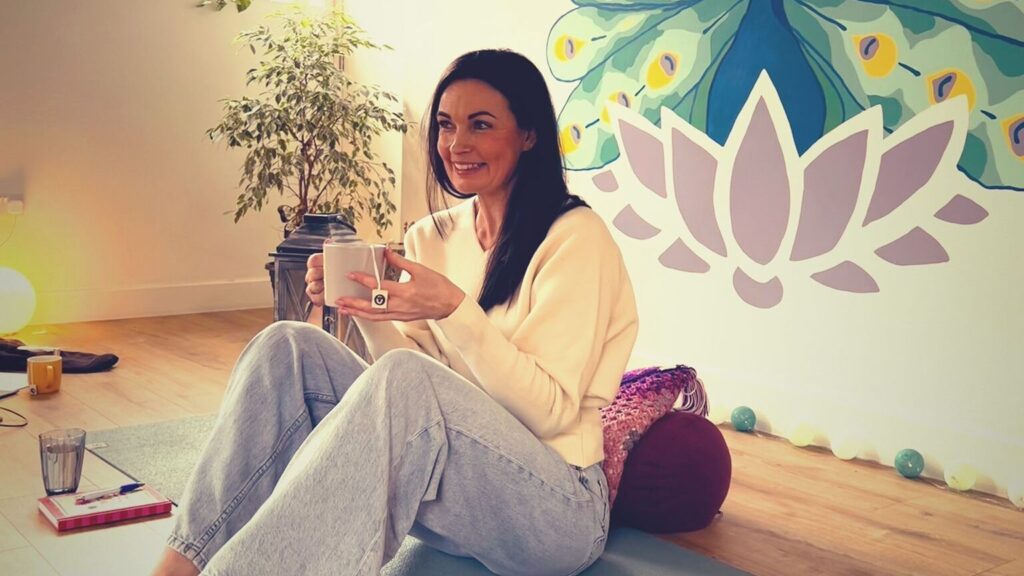
Ruth Edwards relaxing on a mat with a cup of tea, looking settled and happy

The vagus nerve is the longest cranial nerve in the body, running from the brainstem through the face, throat, heart, lungs and digestive organs. It plays an important role in how your body regulates itself, but it’s only one part of a much bigger system. Rather than “stimulating” it, it’s more accurate to think about supporting your nervous system to become more flexible over time.

You might have heard the term vagus nerve being mentioned more and more, especially in conversations around anxiety, trauma and nervous system regulation.

But what actually is it, and why does it matter so much when it comes to how you feel day to day?

What is the vagus nerve?

The vagus nerve is the longest cranial nerve in the body. It runs from the brainstem down through the face, throat, heart, lungs and digestive organs.

It's a key part of the autonomic nervous system – the system responsible for regulating things like heart rate, breathing, digestion and stress responses.

The vagus nerve is part of the parasympathetic branch, which is involved in slowing things down, supporting recovery, and enabling states of connection and restoration. It also plays a role in communication between the brain and body, constantly sending and receiving information about what's happening internally.

Understanding nervous system states

Your nervous system is always shifting between different states depending on what's happening around you. Broadly speaking, these include:

Mobilisation (fight or flight) – when your system prepares you to act
Connection and regulation (in Polyvagal Theory, linked to ventral vagal activity) – when you feel more present, safe enough, and engaged
Shutdown (freeze or collapse, in Polyvagal Theory, linked to dorsal vagal activity) – when the system conserves energy or protects through disconnection

The vagal terms here come from Polyvagal Theory, which many people find a useful way to describe these states, though researchers still debate it. These states are part of how your body responds and adapts. We need all of them.

The key is not to stay in one state all the time, but to be able to move between them and return towards balance when the situation has passed.

Why the vagus nerve matters

The vagus nerve plays an important role in how your body regulates itself, but it's only one part of a much bigger system.

Ideally, we don't stay in just one state. We move in and out of them throughout the day. What really matters is how easily your system can return towards balance after activation. This is sometimes described as nervous system flexibility or regulation capacity.

You may also hear the term vagal tone, which is one way of describing how effectively this pathway supports regulation in the body. Higher vagal tone is generally associated with a greater ability to:

  • settle after stress
  • adapt to changing situations
  • feel more present and engaged

But this isn't just about the vagus nerve on its own. Your capacity to regulate is shaped by many factors, including your past experiences, your environment, your physiology, and the practices you engage in regularly.

The link between the body and emotional experience

Your emotional state isn't just created by your thoughts. It's shaped by what your body is experiencing.

If your nervous system detects something as threatening – whether that threat is happening now or is linked to something unresolved from the past – your body can respond automatically. And when your system is activated in that way, it can be harder to think clearly.

This may be why mindset tools don't always land when someone feels overwhelmed or shut down. It can help to settle your body first.

Supporting nervous system flexibility

You may have heard people talk about ‘stimulating the vagus nerve’. A more accurate way to think about this is supporting your nervous system to become more flexible over time. Some ways this can be supported include:

  • Slow, rhythmic breathing – such as inhale for 5, exhale for 5, through the nose
  • Longer exhales – which can support parasympathetic activity
  • Gentle vocalisation – humming, singing or gargling
  • Orienting to your environment – looking around and noticing what feels neutral or safe enough
  • Grounding through the body – feeling your feet, your body in contact with a chair, or movement
  • Cold water on the face – which can activate reflexes linked to the parasympathetic system

Used regularly, they are ways of helping your system build capacity and responsiveness over time.

You'll find more simple practices like these in my free guide, Get Out of Your Head.

Why this matters for healing

If your system has spent a long time in protective states, it doesn't simply switch out of them because life looks different now.

The brain and body don't always clearly distinguish between past and present if something hasn't been fully processed. So even when you know you're safe, your body may still respond as if there's a threat.

This is where body-based approaches become important. By working with the nervous system, you can begin to:

  • reduce the intensity of those responses
  • feel more present in your body
  • respond rather than react
  • gradually build a sense of safety from within

A final thought

This work isn't about forcing yourself to feel calm all the time. It's about supporting your system to become more adaptable, so it can respond when needed, and settle again afterwards.

Your body already has the capacity to regulate. Sometimes it just needs the right support, and the right conditions, to find its way back there.

If this speaks to you, this is the kind of work I do with clients – helping you understand your nervous system, build regulation skills, and gently process what your body has been holding, so you can feel more like yourself again.

Related support: Nervous system regulation coaching online · Narcissistic abuse recovery · Free body check-in

Quick answers

What is the vagus nerve?

The vagus nerve is the longest cranial nerve in the body. It runs from the brainstem down through the face, throat, heart, lungs and digestive organs.

Can you stimulate the vagus nerve to feel calmer?

You may hear people talk about stimulating the vagus nerve. A more accurate way to think about it is supporting your nervous system to become more flexible over time, because the vagus nerve is only one part of a much bigger system.

Why don’t mindset tools always work when I’m overwhelmed?

When your nervous system is activated, it can be harder to think clearly. Mindset tools may not land when someone feels overwhelmed or shut down, so it can help to settle your body first.

Is the goal to feel calm all the time?

No. The aim is to help your system become more adaptable, so it can respond when needed and settle again afterwards.

Sources

This article is for general information. Coaching is not a substitute for therapy or medical care. If you’re in the UK and need urgent help, call 999, NHS 111 (option 2) or Samaritans on 116 123. If you’re elsewhere, contact your local emergency services.

Ruth Edwards, somatic trauma-informed coach and Brainspotting practitioner

Ruth Edwards is a somatic trauma-informed coach and Brainspotting practitioner, working online worldwide and in person in Shropshire, UK. About Ruth